photo of bsf study of romans: from guilt to grace Romans 1:1-7 www.atozmomm.com

BSF Study Questions Romans: From Guilt to Grace Lesson 1, Day 2: Romans 1:1-7

Summary of Romans 1:1-7

Paul was called to bring the good news of the saving grace of Christ to Gentiles. He greets the Romans as such, saying they belong to Jesus and are loved by God and called to be His holy people.

BSF Study Questions Romans: From Guilt to Grace Lesson 1, Day 2: Romans 1:1-7

3a) “A servant of Christ Jesus, called to be an apostle, and set apart for the gospel of God”

b) We learn that Paul’s authenticity and veracity are questioned because of his previous persecution of Christians, yet he was successful in converting people to Christ. We learn that Paul believes himself to be the worst of the worst of sinners, but Christ showed him mercy, so that Christ might show his patience in sinners. He received God’s grace, faith, and love.

Acts reveals Paul’s immediate preaching of Jesus’ divinity and apologetic skill, while 1 Timothy highlights his former violence, deep humility, and transformative grace.

4a) We learn that Christ has called the Gentiles to obedience through faith in Christ’s name and included them in the good news/eternal salvation of Christ’s death and resurrection on the cross.

Jesus is the divine Messiah saving all sinners—shown when even a violent persecutor like Paul receives complete forgiveness, infinite patience, and new purpose.

b) I am a Gentile who has been included and counted as a child of God, included in God’s grace and mercy to be saved by faith in Jesus for eternal life.

5a) He told the Romans that they are among those called to belong to Jesus. They are loved by God and called to be His holy people.

Paul encouraged Roman believers by affirming their divine calling, validating their identity as God’s loved saints, and blessing them with grace and peace.

b) All believers are unbelievably blessed to be called to be a part of God’s eternal kingdom. Therefore, we should all show grace and mercy to others.

Conclusions BSF Study Questions Romans: From Guilt to Grace Lesson 1, Day 2: Romans 1:1-7

Love how Paul starts out with the best news of all — we are saved! You could literally stop reading here since if that’s all you get from Paul, you got the most important message.

End Notes BSF Study Questions Romans: From Guilt to Grace Lesson 1, Day 2: Romans 1:1-7

There are almost no commentators who dispute that Paul is the author of Romans. It is believed this great book of the Bible was written somewhere around 55 AD in the city of Corinth. He would have been on his third missionary journey. Acts 20:2-3. This is based on Romans 16:1 and 16:23 along with 1 Corinthians 1:14. He planned to visit Rome after he went to Jerusalem.

Note Paul is first a servant of Christ and then an apostle. A servant is utterly devoted.

Romans is a book about God, different than Paul’s other letters, which focus on the churches he wrote to.

Fun Fact: The word “God” appears 153 times in the book of Romans, more than any other New Testament book.

If you look at the frequency of other words in Romans (Lord appears 43 times and faith appears 40 times), you’ll see a huge difference.

Paul did not found the church in Rome, which is different than the other churches he wrote to.

Jesus Christ is the center.

“Grace to you” is a traditional greeting used by Greeks. “Peace from God” is a traditional greeting used by the Jews. Note how Paul is already including the Gentiles here.

Christians are called to live differently. We are made righteous and justified through the blood of Christ on the cross. Christ gives us his perfection so that we can stand with God once again.

END NOTES SUMMARIZED

Romans 1:1–7 functions as Paul’s formal prescript, but it packs an entire systematic theology into a single sentence. Because Paul had not yet visited the church in Rome, he uses this greeting as a theological resume, establishing his authority, defining his message, and honoring his audience.

1. The Messenger: Identity and Authority (v. 1) Paul introduces himself with three distinct titles:

  • “Servant” (Doulos): Expresses absolute devotion and ownership by Christ. In a Roman context, a slave lacked status, but in a Hebrew context, “servant of the Lord” placed Paul in line with Moses, David, and the prophets.

  • “Called to be an apostle”: Establishes that his leadership was not self-appointed or humanly assigned, but directly commissioned by God.

  • “Set apart for the gospel”: His singular focus and lifelong vocation are dedicated entirely to God’s good news.

2. The Message: The Gospel’s Roots and Realities (vv. 2–4) Paul immediately grounds his theology in history and Christology:

  • Promised beforehand (v. 2): The gospel is not a novel invention or a departure from Judaism; it is the fulfillment of the Old Testament Scriptures.

  • According to the flesh (v. 3): Refers to Jesus’ human lineage as a descendant of King David, establishing his legal right to the messianic throne.

  • Declared Son of God in power (v. 4): The Resurrection did not make Jesus God’s Son, but it vindicated Him, revealing His divine power and authority as the resurrected Messiah.

3. The Mission: Bringing Faith to the Nations (vv. 5–6)

  • Grace and Apostleship: Paul attributes his calling to unmerited favor (grace), which empowers his office (apostleship).

  • “Obedience of faith”: Real faith is not merely intellectual assent; true belief produces active obedience.

  • Among all the Gentiles: Paul clarifies his target audience. The church in Rome contained both Jews and Gentiles, but Paul highlights his specific call to the non-Jewish world.

4. The Recipients: Believers in Rome (v. 7) Paul addresses the Christians in Rome not as a geographic institution, but as a community defined by grace:

  • Loved by God & Called to be saints: “Saint” (hagios) means “set apart.” Believers do not become saints through extraordinary moral effort; it is their identity based on God’s call.

  • Grace and Peace: Paul combines the standard Greek greeting (charis / grace) and Hebrew greeting (shalom / peace), anchoring both in God the Father and the Lord Jesus Christ.

Conclusion

Romans 1:1–7 anchors Paul’s gospel in ancient prophecy, reveals Jesus’ divinity through resurrection, and unites believers as God’s loved, called saints under grace.

Best Back-to-School Items!

*As an Amazon associate, I earn from qualifying purchases

Contact me today!

photo of the book of revelation bsf bible study www.atozmomm.com

BSF Study Questions Revelation: The Hope Lesson 1, Day 2: Read the Scripture Passages With the Questions

BSF Study Questions Revelation: The Hope Lesson 1, Day 2: Read the Scripture Passages With the Questions

3a) “We also have the prophetic message as something completely reliable, and you will do well to pay attention to it, as to a light shining in a dark place, until the day dawns and the morning star rises in your hearts. 20 Above all, you must understand that no prophecy of Scripture came about by the prophet’s own interpretation of things. 21 For prophecy never had its origin in the human will, but prophets, though human, spoke from God as they were carried along by the Holy Spirit.”

b) Basically, all prophecy is God-breathed and truthful. This means that we can trust prophecy and know it is true. This helps us to prepare for what is to come, and it offers us hope, too.

4a) So that you will believe in Jesus.

b) It definitely makes it easier to believe in Jesus, that’s for sure! Prophecy shows the sovereignty of God and how He is the one in control of everything in the universe. I can rest easier, have more peace, and have more faith in the One, True God.

5) God Himself never lies and is good, sovereign, faithful, holy, loving, omnipotent, omniscient, just, forgiving, wise, merciful, eternal, and perfect. We can therefore believe Biblical prophecy because we can trust in God and who He is.

Conclusions BSF Study Questions Revelation: The Hope Lesson 1, Day 2: Read the Scripture Passages With the Questions

Great stuff! I love how we take the time to truly understand what exactly Biblical prophecy is before we just dive into it all. In this Bible study, faith in the reliability of God’s Word will be paramount and overarching to this whole study.

End Notes BSF Study Questions Revelation: The Hope Lesson 1, Day 2: Read the Scripture Passages With the Questions

It’s important to know that we don’t have to fully understand prophecy in order to trust in its truth.

Fun Fact: Biblical prophecy is a BIG part of the Bible, comprising one-fourth of the Bible.

Fun Fact: There are only 4 books in the Bible that contain no prophecy whatsoever: Ruth, Song of Solomon, Philemon, and 3 John.

Biblical prophecy is written by humans through the power of the Holy Spirit.

Prophecy revolves around one central theme: how God will send His Son, Jesus Christ, to save His people.

Contact me today!

Great Resources for Our Study of Revelation: The Hope

https://amzn.to/3XB4Ckl

https://amzn.to/3Z9mkfU

https://amzn.to/4eai04f

https://amzn.to/3ATLh4V

https://amzn.to/4g8XeE5

https://amzn.to/4cUhE0z

https://amzn.to/3TlX42d

https://amzn.to/47lH7Pw

https://amzn.to/3XCigUo

https://amzn.to/3Xw94AC

*As an Amazon associate, I earn from qualifying purchases

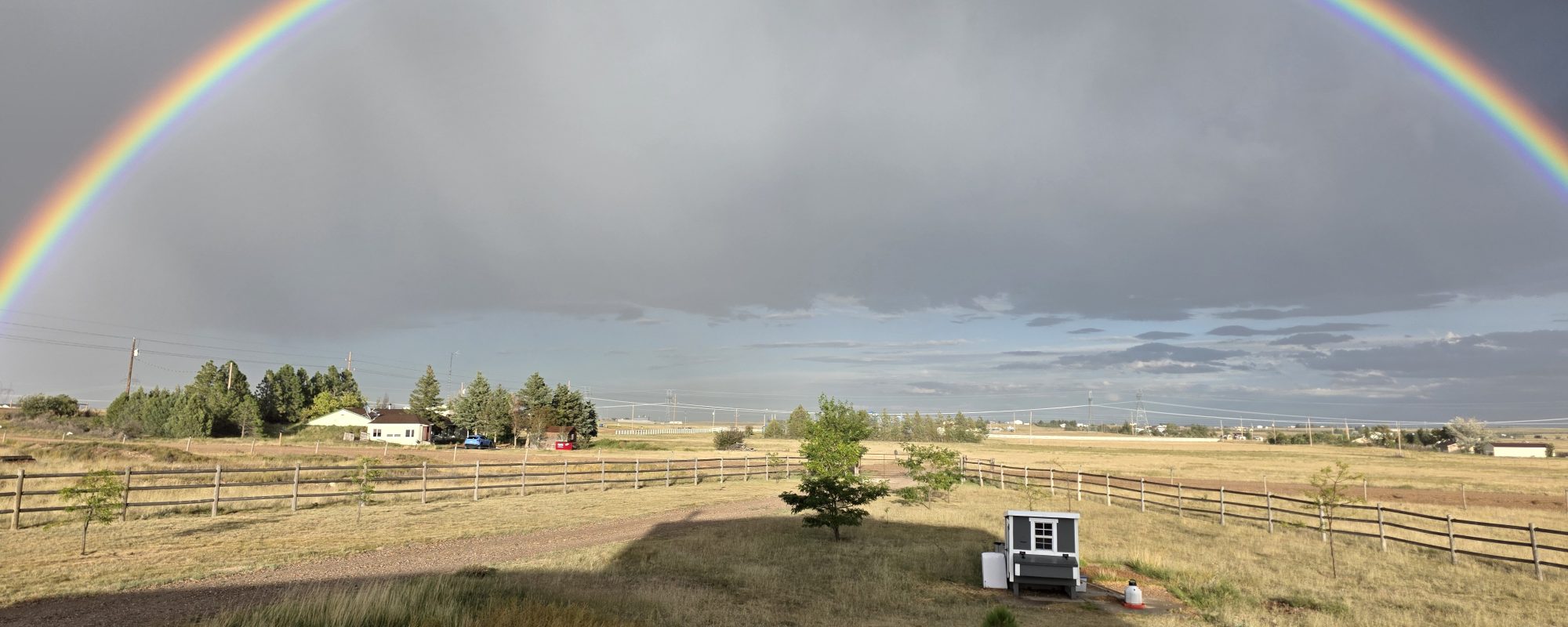
beautiful sunrise in wyoming www.atozmomm.com

BSF Study Questions John’s Gospel: The Truth Lesson 1, Day 2: John 1:1-5

SUMMARY OF JOHN 1:1-5

God existed from the very beginning, as well as the Word/Jesus. All things are made in God and Jesus. God/Jesus is light. Nothing can defeat light/God/Jesus.

BSF Study Questions John’s Gospel: The Truth Lesson 1, Day 2: John 1:1-5

3) Jesus was in existence from the beginning. Jesus was with God. Jesus was God. Jesus has always been means he was not created. He is God. Everything that is true about God is true about Jesus.

4)

Genesis 1:1: God created everything from the beginning. This means Jesus participated in creation, too.

Colossians 1:15-17: Jesus is equal with God since he was in existence from the beginning and participated in creation. Jesus created all things.

Hebrews 1:1-3: Jesus is heir of all things. God made the universe through Jesus. Jesus is God.

5a) Light is God and Jesus. Darkness is evil, sin, and Satan. If we believe in Jesus, we have light, too.

b) Light is the good deeds people do. Darkness is the bad we do to each other.

Conclusions BSF Study Questions John’s Gospel: The Truth Lesson 1, Day 2: John 1:1-5

Love the opening of John. He says exactly what we need to know from the get-go. Jesus is God. If you have them, you will have light. Darkness cannot overcome light.

End Notes BSF Study Questions John’s Gospel: The Truth Lesson 1, Day 2: John 1:1-5

  • John’s Gospel was written last and at the end of John’s life. This is perhaps why John did not record the same things as the other 3 Gospels.
  • We see Jesus in Jerusalem here.
  • John emphasizes that Jesus is God.
  • John will discuss 7 miracles.
  • John uses Jesus’s words in the 7 “I Am” statements.
  • John’s point is so we will believe in Jesus as the Son of God.
  • The Word is “logos” in Greek. This word puts meaning to the world.
  • Jesus is the Word here.
  • The Father and the Son are equally God, but distinct in person.
  • The Word/Jesus created all things that were created.
  • The Word is life.
  • The Word is light.
  • Without Jesus we are dead and dark.

Contact me with questions!

Great Resources for Our Study of the Gospel of John

*As an Amazon associate, I earn from qualifying purchases

god's law people of the promise kingdom divided bsf lesson 1 www.atozmomm.com

BSF Study Questions People of the Promise: Kingdom Divided Lesson 1, Day 2: Psalm 19:7-11; 119; 160 and John 6:63; 17:17

SUMMARY OF PSALM 19:7-11

God’s law, statues, precepts, and commands are perfect. The fear of the Lord is pure, the ordinances are righteous. They are more precious than gold. You will be rewarded by keeping them.

SUMMARY OF PSALM 119:160

“All your words are true; all your righteous laws are eternal.”

SUMMARY OF JOHN 6:63

“The Spirit gives life; the flesh counts for nothing. The words I have spoken to you are spirit, and they are life.”

SUMMARY OF JOHN 17:17

“Sanctify them by the truth; your word is truth.”

BSF Study Questions People of the Promise: Kingdom Divided Lesson 1, Day 2: Psalm 19:7-11; 119; 160 and John 6:63; 17:17

4a) The Bible provides us with God’s commands on how we are to live and worship.

b) The Bible has comforted me many times in my trials. It has offered helpful advice in difficult relationships, and it’s been a beacon of light when I’m wandering lost.

5a)

Creation — The Bible tells of how the earth, heavens, mankind, and life on earth was created and offers guidance on how they are to live. God provides everything all life needs to survive and thrive.

Rebellion — Much of the Old Testament is about how mankind repeatedly rebels against God, his judgment upon them, and his care and love for them despite their rebellion. We learn how God always pulls us back to him no matter how far we wander.

Redemption — What the entire Bible is about, as well as the New Testament. It’s also the purpose of Jesus Christ. It’s the story of the Fall of Man and how God sent his Son to redeem all of humanity and bring them back to Him.

Restoration — When Jesus was crucified on the cross and died for our sins, all of humanity was redeemed and able to live forever with God in heaven. As long as you accept Jesus’s sacrifice on the cross for your sins.

b) It’s the story of God’s creation of the world, man’s perpetual rebellion against him, God’s plan to redeem humanity through his Son, Jesus Christ, and our final restoration with God upon acceptance of Jesus as our Lord and Savior.

6) Lord, guide me this year in my challenges, open my heart to you through this study and in daily life, and let your will be done in my life and in the lives of those around me. Give me the strength to persevere in all things, especially those for you. Let the dreams of my heart be from you, as you open the door to make them come true. Amen.

Conclusions BSF Study Questions People of the Promise: Kingdom Divided Lesson 1, Day 2: Psalm 19:7-11; 119; 160 and John 6:63; 17:17

Great opening lesson! I loved the introductory notes and the overview of the Bible. I’m definitely looking forward to this year’s study!

End Notes BSF Study Questions People of the Promise: Kingdom Divided Lesson 1, Day 2: Psalm 19:7-11; 119; 160 and John 6:63; 17:17

David’s point in Psalm 19:7-11 is to praise God for revealing himself through his Word and not just through Creation. He chooses his words wisely: law, testimony, precepts, commands, fear, and ordinances.

God’s Word is never wrong, it’s reliable, it’s right, it’s pure, it’s enduring, and it’s true and righteous. And King David didn’t even have all of the Bible!

God’s Word is more valuable than gold and sweeter than honey. It warns us, and it rewards us.

We are set apart (sanctified) for God’s purpose and pleasure. The more truth we believe and understand, the more sanctified (or the more we will be God’s) we will be.

Powerful stuff as we begin this study!

Contact me today!

Great Bible Resources Moving Forward

*As an Amazon associate, I earn from qualifying purchases.

bsf study of matthew www.atozmomm.com

BSF Study Questions Matthew Lesson 1, Day 2: Matthew 1:1-17

Summary of Matthew 1:1-17

Matthew lists the genealogy of Jesus in these 17 verses. You’ll find a mix of characters here, from prostitutes, such as Rahab to kings, such as David and Solomon.  Most of the names are simply that — names of people whom the Bible does not talk about. However, God chose all to be a relative of Jesus. How cool is that?

Consider that there were 14 generations from Abraham to David, from David to the time of the Babylonian exile, and from the exile to the Messiah. Why the number 14? Matthew leaves out generations in order to create this numeric lineup. The letters of the Hebrew alphabet represented numbers, too. The letters in David’s name add up to 14, which is used to show that Jesus was the son of David, but also that Jesus is greater than David.

BSF Study Questions Matthew: Lesson 1, Day 2: Matthew 1:1-17

3)  It was super important in the Jewish culture at that time to know that Jesus, the son of God, came from those whom God chosen, including Abraham, Isaac, Jacob, and David, and that he was of royal birth as the King of Kings. It lent credibility to the fact that Jesus was indeed the Messiah of the world as it proved Jesus’s royal line.

4) Matthew connects Jesus to David through Joseph. Most are names of those who were ordinary people.

5a)

TAMAR — GENESIS 38

  • Tamar disguised herself as a prostitute to lay with Judah, her father-in-law. This was because Judah would not give her his son as her husband as he was required to do by law.

RAHAB — JOSHUA 2; 6:17

  • Rahab hid the spies sent by Joshua from the king of Jericho and so only her and her family was spared when Jericho was conquered. She turned away from her gods to the One, True God and was rewarded for it. She then married Salmon and became a direct relative of Jesus.

RUTH — RUTH 1; 4:13-17

  • Ruth was a Moabitess who accompanied Naomi, her mother-in-law back to Bethlehem when her husband had died. She faithfully provided for Naomi, garnering the attention of Boaz, her kinsman-redeemer. They were married, and the rest is history.

“WIFE OF URIAH” — 2 SAMUEL 11; 12:15, 18, 24

  • The wife of Uriah was Bathsheba. David committed adultery with her, and she ended up conceiving. However, this child died as punishment for David’s adultery. The next son that was born was Solomon.

MARY — LUKE 1:26-56

  • God chose Mary to bear Jesus who was miraculously conceived.

5b ) None of these women are perfect. Tamar used deceit to conceive. Rahab was a prostitute. Ruth was a foreigner. Bathsheba committed adultery. Mary was a virgin. They all tell of how God uses whom he chooses for his purposes.

6) I think everything I have today is by God’s grace: my family, pets, home, job, etc. He gives me everything.

Conclusions BSF Study Questions Matthew: Lesson 1, Day 2: Matthew 1:1-17

Check out this gem of a book I found about these great women of the Bible!

I love Matthew’s genealogy. They are all imperfect people — some of them just a written name — who all played a role in bringing salvation to the world. Pretty cool. They were all chosen by God for a purpose, as we all are chosen by Him for a purpose, too. Sometimes, we might not see that purpose right away.

End Notes BSF Study Questions Matthew: Lesson 1, Day 2: Matthew 1:1-17

The first thing Matthew emphasizes is the history of Jesus. This is to show that Jesus came from Abraham, the patriarch of God’s people and of the Jewish faith and that he came from the line of David (2 Samuel 7:12-16) to establish his rightful claim to be king. The Old Testament prophesied that the Messiah would be a son of David.

You will see throughout Matthew that he makes a concerted effort to bridge the gap between the Old Testament and the New Testament. There is a 400-year gap that is known as the Intertestamental Period (between Testaments). This time was full of upheaval, chaos, uncertainty, wars, and more. Rome took over Jerusalem. Rome oppressed the Israelites, so they realized their only hope was God. The world most definitely needed saving. And the time was right for Jesus to come. With the relative peace of Pax Romana, travel was possible, so Jesus’s disciples could indeed spread the Good News. Quick summary HERE

ABOUT MATTHEW

Matthew (also known as Levi) was a tax collector who was despised by the people. Yet, he gave it all up to become an apostle of Jesus. It is likely Matthew was well-versed in Hebrew, Aramaic, and Greek. Furthermore, this is the only Gospel written by a disciple. It was the most highly valued Gospel and the most quoted before 180 AD. It appears first in most lists.

There are two main themes Matthew follows:

  1. Matthew connects Jesus as the Savior and King promised in the Old Testament
  2. Matthew records Jesus’s teachings to show us how to live a life with purpose by following God

THE GENEALOGY

The fact Matthew mentions the four women shows God’s grace and how God is for everyone. God identifies with sinners. God includes women. Note how Joseph is the husband of Mary, not the father of Jesus. Matthew uses the number 14 to organize his genealogy. There are 14 generations from Abraham to David, from David to Babylon, from Babylon to Jesus. It is not meant to be complete.

Luke shows Jesus’s genealogy through Mary, who is through Nathan, a different son of David. (Luke 3:31)

Interesting fact:

Matthew passed over a man named Jehoakim (2 Chronicles 36:5-8) in his genealogy between Josiah and Jechoniah (Matthew 1:11). Jeremiah the prophet revealed that God decreed that no blood descendant of Jehoakim would sit on the throne of Israel (Jeremiah 36:30-31) because he was so wicked. Mary was not a part of the blood curse on the line of Jehoiakim since she is descended from Nathan and not Solomon.

Fun facts:

  • Matthew is known as the teaching Gospel.
  • Matthew is the only evangelist to use the word “church.”
  • Matthew is the Gospel of fulfillment.

TO THINK ABOUT

God gave us the Bible to show us how to live, to show us we are forgiven by Jesus’s sacrifice, we are his, and to give us purpose. By knowing God, we can experience everything God has for us. You are where you are at for a reason. What is that reason? Contact me today!

*As an Amazon Associate, I earn from qualifying purchases.

BSF Study Questions Genesis Lesson 1, Day 2: Genesis 1

Introductory Note:  Hey all!  It’s great to be back.  Just some information up front. The answers will be found under BSF Genesis on the side bar.  It might take a couple of weeks for it to show up since the side bar is determined by popularity so be patient! Until then, you can use the search in the side bar or scroll down to find the answers.

Summary of passage:  In the beginning, God created the heavens and the earth.  The earth was formless and void but the Spirit of God was hovering over the waters.

1st Day:  God made light and He saw it was good.  He separated light from dark.  He called light “day” and dark “night.”

2nd Day:  God separated the waters to create sky.

3rd Day:  He let the dry ground appear, which He named “land” and the gathered waters he called “seas”.  Then the land produced vegetation–all of which God saw was good.

4th Day:  God made the sun, moon, and stars to be used as signs to mark the seasons, days, and years; to give light on the earth; to govern the day and the night; and to separate light from darkness.  God saw that it was good.

5th Day:  God created the great creatures of the sea as well as every winged bird.  He blessed them to multiply and fill the earth.  He saw it was good.

6th Day:  God created living creatures on the land and all the wild animals and He saw it was good.  He made man in His own image to rule over all the earth and its creatures.  God blessed them and told them to be fruitful and rule.  He gave man every green plant for food and everything that has the breath of life in it.  God saw that it was very good.

Questions:

3a)  God is the subject of most sentences followed by an action verb (said, saw, created, called, made, set, blessed).  It’s all about God.  His name is used 30 times in Chapter 1.  He’s the center.  Nothing happens in this chapter without Him.  It’s true now.  He’s the center and nothing happens in this world without Him.

b)  The word let is very common in English.  I sense no pompousness here or a great booming voice–just God casually (yet purposefully) creating all.  Let means “to cause to or make” according to Webster’s Dictionary.  God is causing or making all.

Another meaning of let in Webster’s Dictionary is the imperative (command) form here, meaning to introduce a request or proposal.  It’s a command yet it’s gentle.

“It was so” means everything God spoke was.  He is omnipotent and Chapter 1 of Genesis shows this clearly.

4)  He saw that all He had made was very good (verse 31)

5a)  Jeremiah 10:12:  God made everything by His power, wisdom, and understanding

Acts 17:24-25:  God made the world and is therefore Lord and He does not need anything because He’s the ultimate (and the first) giver.

Romans 1:18-20:  Since God is the Creator His eternal and divine qualities are in everything.

b)  Personal Question.  My answer:  This is a stupid question.  Why doesn’t BSF just come out and say the word “evolution” instead of tip-toeing around it?  Obviously, if you are a believer, then you believe in the Creation and not in Evolution.  It’s the first words of the Bible.  This alone speaks to its significance.

Conclusions:  I felt silly summarizing Genesis 1, the most popular and probably well-known chapter in the entire Bible. But I had never listed out each individual day before so I learned the sequence of Creation.

I think we must be careful not to get too comfortable with this study.  Most of us know the stories in Genesis like the back of our hand.  But do we know the significance of the stories?

I know I don’t.  This is why I am doing this study.

Some fun facts I already learned:  The Bible would not make much sense without the book of Genesis.  Almost every fundamental doctrine begins here:  sin, redemption, the power of God, the purpose of Jesus Christ, and justification.

Moses is believed to have written the book of Genesis (Luke 24:27, 44).

Genesis is quoted in the New Testament over 150 times.

I pray everyone has a deep and meaningful study in the book of Genesis and that perhaps you glean something here.